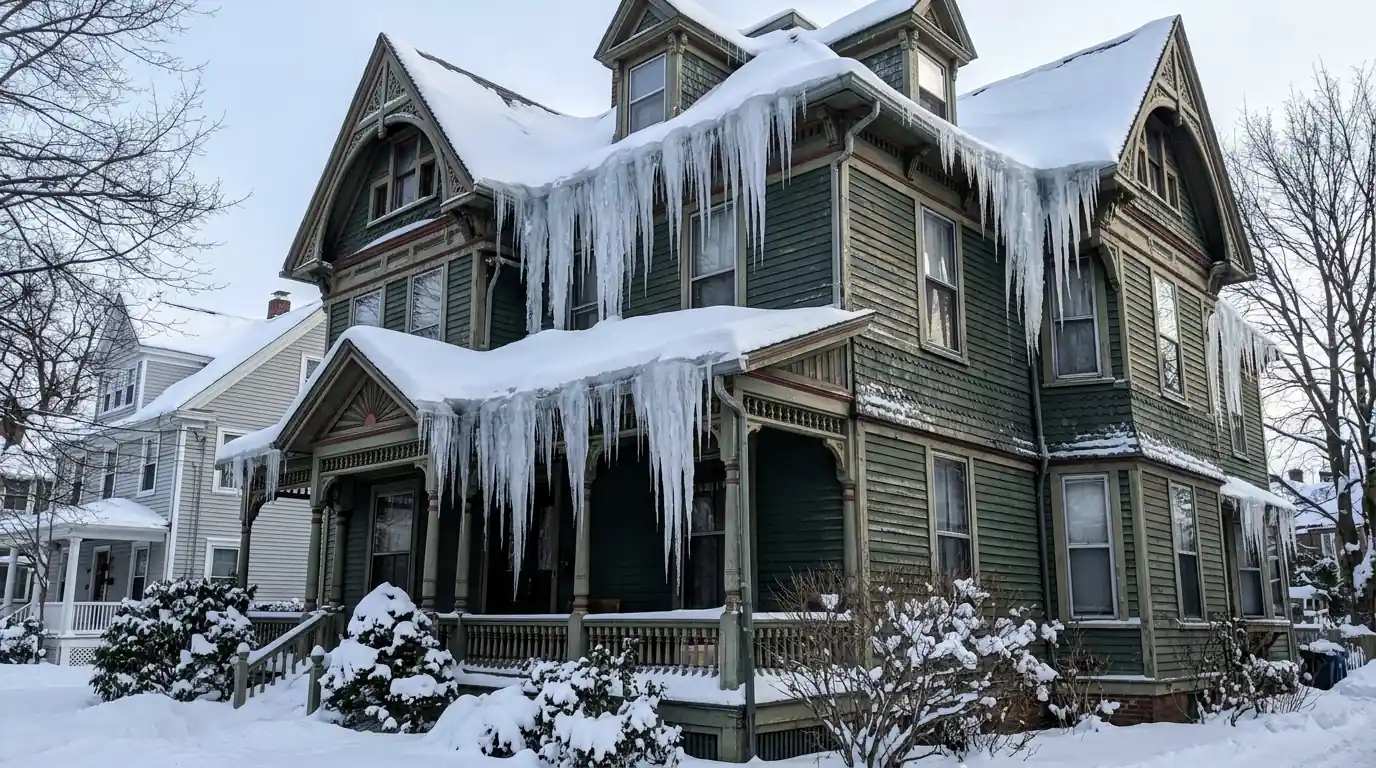
Ice dams form when heat leaking from the house melts snow on the upper roof and the water refreezes at the cold eaves. On older New Haven homes the heat usually escapes through finished attics, knee walls and gaps around chimneys. Steam removal clears the dam; air sealing, insulation and ventilation stop the next one.
What an ice dam actually is
An ice dam is a ridge of ice along the lower edge of a roof. It starts with snow sitting on a roof that is warmer in the middle than at the edge. The warm part melts the snow from underneath, the water runs down, and when it reaches the overhang, which sits outside the heated house, it freezes again.
Each thaw adds another layer. Within a week or two of a cold snap the ice can be several inches thick, and the next melt has nowhere to go. It backs up under the shingles, past the nail line, and into the roof deck, the wall cavity and the ceiling below.
Why older houses in the city get them so often
A lot of New Haven's housing was built before anyone insulated attics the way we do now. Story-and-a-half houses in Edgewood and Westville, Victorians in East Rock and Beaver Hills, and many two-families have finished third floors tucked under steep roofs. The sloped ceilings in those rooms often have little insulation behind them, and the knee walls leak warm air straight into the cold spaces at the eaves.
Add in chimney chases with open gaps, plumbing stacks running from the basement to the roof, and bath fans that vent into the attic, and you get a roof that melts snow unevenly. The icicles are just the part you can see.
- Finished attic rooms with knee walls
- Open gaps around chimneys and plumbing stacks
- Recessed lights in top-floor ceilings
- Bath fans venting into the attic
- Little or no soffit ventilation
What not to do
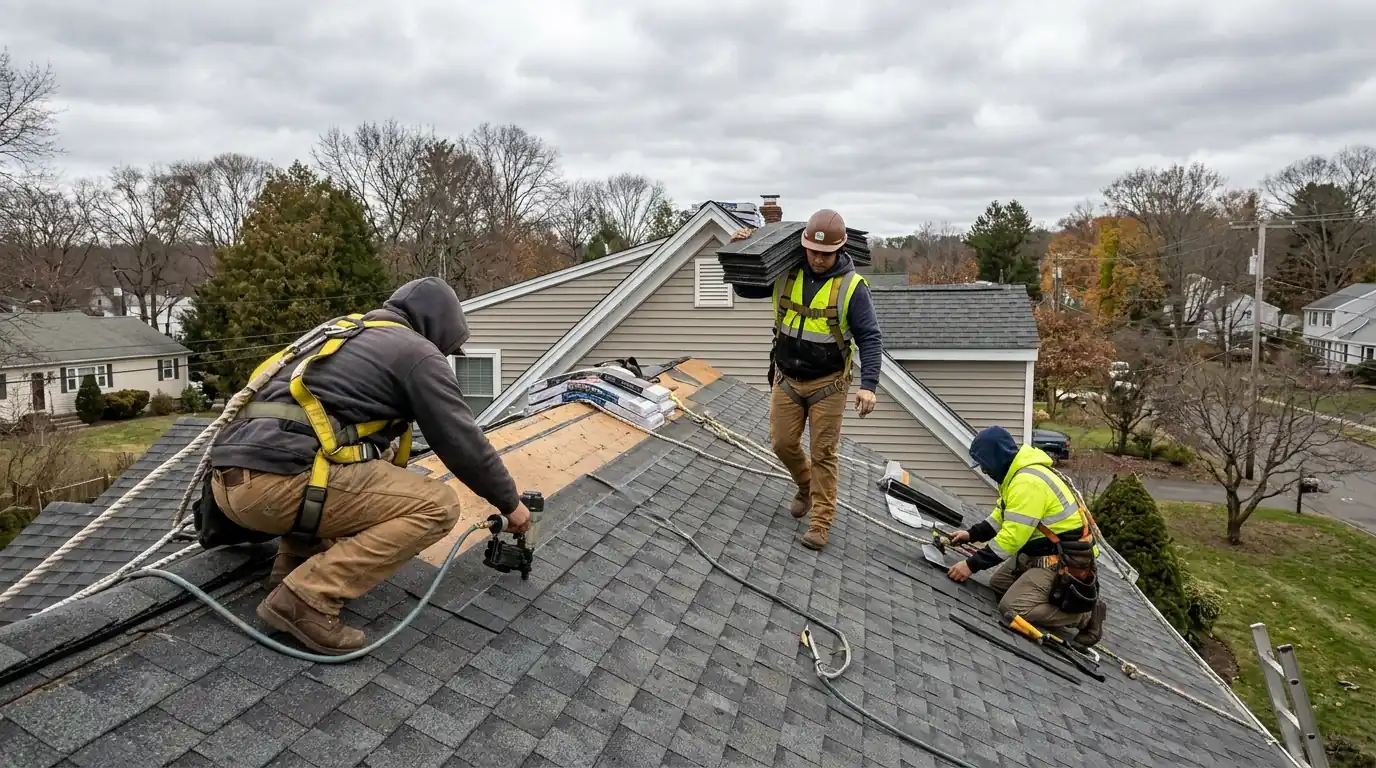
Chipping ice with a hammer, an axe or a shovel breaks shingles and tears gutters off the fascia. Throwing salt pucks on the roof can stain siding and kill plantings below. Pressure washers drive water under shingles.
Raking snow from the ground with a long-handled roof rake is safe and helps. Climbing onto an icy roof is not.
How we remove an ice dam
We use low-pressure steam equipment built for ice dams. Steam cuts through the ice without damaging the shingles underneath. We open channels first so trapped water can drain, then clear the dam back from the edge and empty the gutters and downspouts so melt water leaves the house.
Most single-family dams are cleared in a few hours. Long eaves, three-story houses and very thick ice take longer.
How to stop them coming back
The lasting fix is in the attic, not on the roof. Sealing the air leaks between the heated house and the attic keeps warm air where it belongs. Bringing insulation up to current levels, around R-49 in Connecticut, slows the heat that still gets through. Balanced ventilation, with intake at the soffits and exhaust at the ridge, keeps the underside of the roof cold.
When the roof is replaced, ice and water shield at the eaves stops leaks even if a small dam still forms. Heat cables can keep a channel open on a problem spot, but they treat the symptom.
Questions readers ask
How do I know if an ice dam is leaking into my walls?
Look for damp spots or stains at the top of exterior walls on the top floor, peeling paint near the ceiling line, or water at window heads. Those usually mean melt water is backing up at the eaves.
Are heat cables a good long-term fix for ice dams?
They can keep a drainage path open on a stubborn section, but they use power all winter and do not stop the heat loss that causes the dam. Air sealing and insulation are the lasting fix.