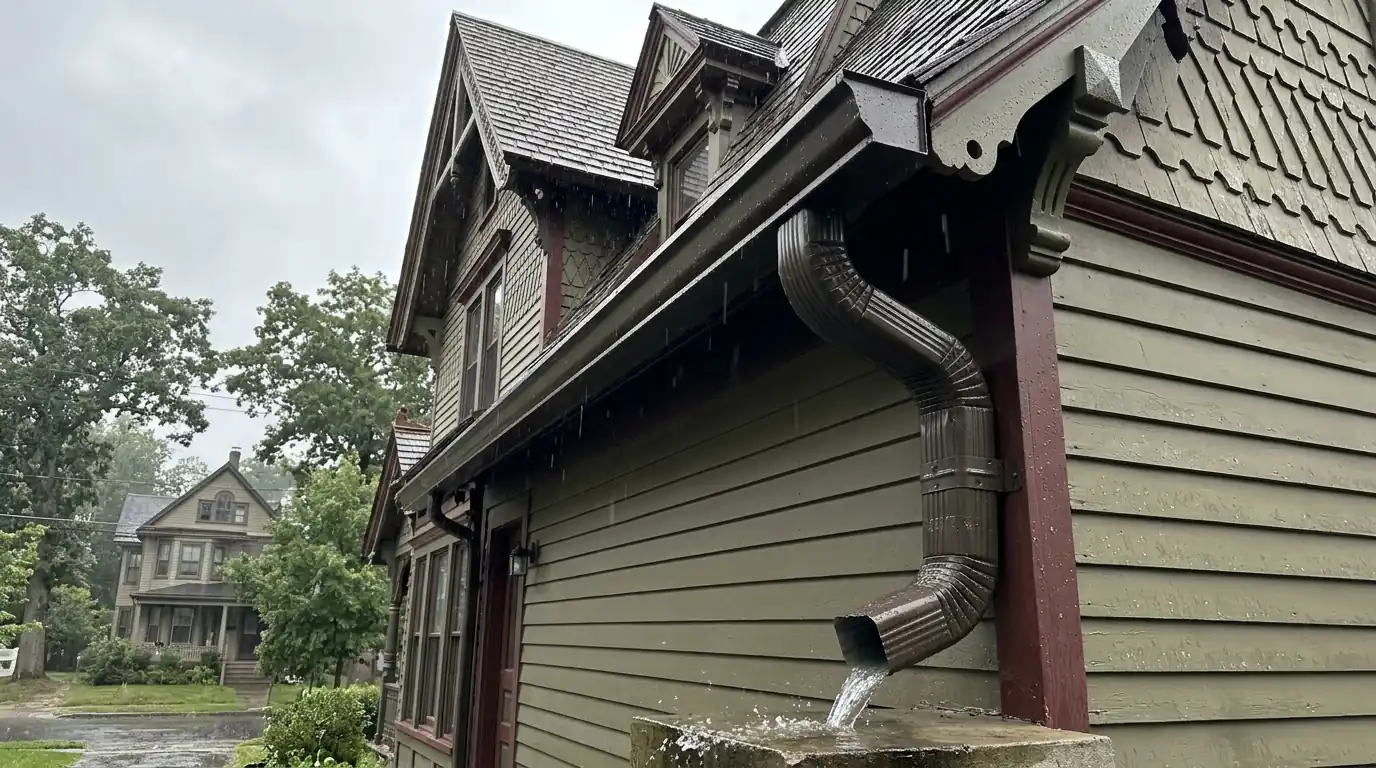
Steep roofs shed water fast, so many older New Haven homes need 6-inch gutters and 3 by 4 inch downspouts rather than the standard 5-inch size. Gutters should pitch about a quarter inch per 10 feet, hangers should sit close together for snow load, and downspouts should carry water several feet from the foundation.
Why roof pitch matters
Rain on a steep roof gathers speed and can shoot past a small gutter. Victorian and Queen Anne houses around East Rock, Edgewood and Prospect Hill often have steep main roofs with long valleys that concentrate water at one corner.
Sizing basics
Gutter size depends on the roof area draining into it, the pitch and local rainfall intensity.
- 5-inch K-style: fine for many average roofs
- 6-inch K-style: better for steep or large roofs
- 3 by 4 inch downspouts move far more water than 2 by 3
- Add a downspout at each long run and at valley corners
Snow and ice
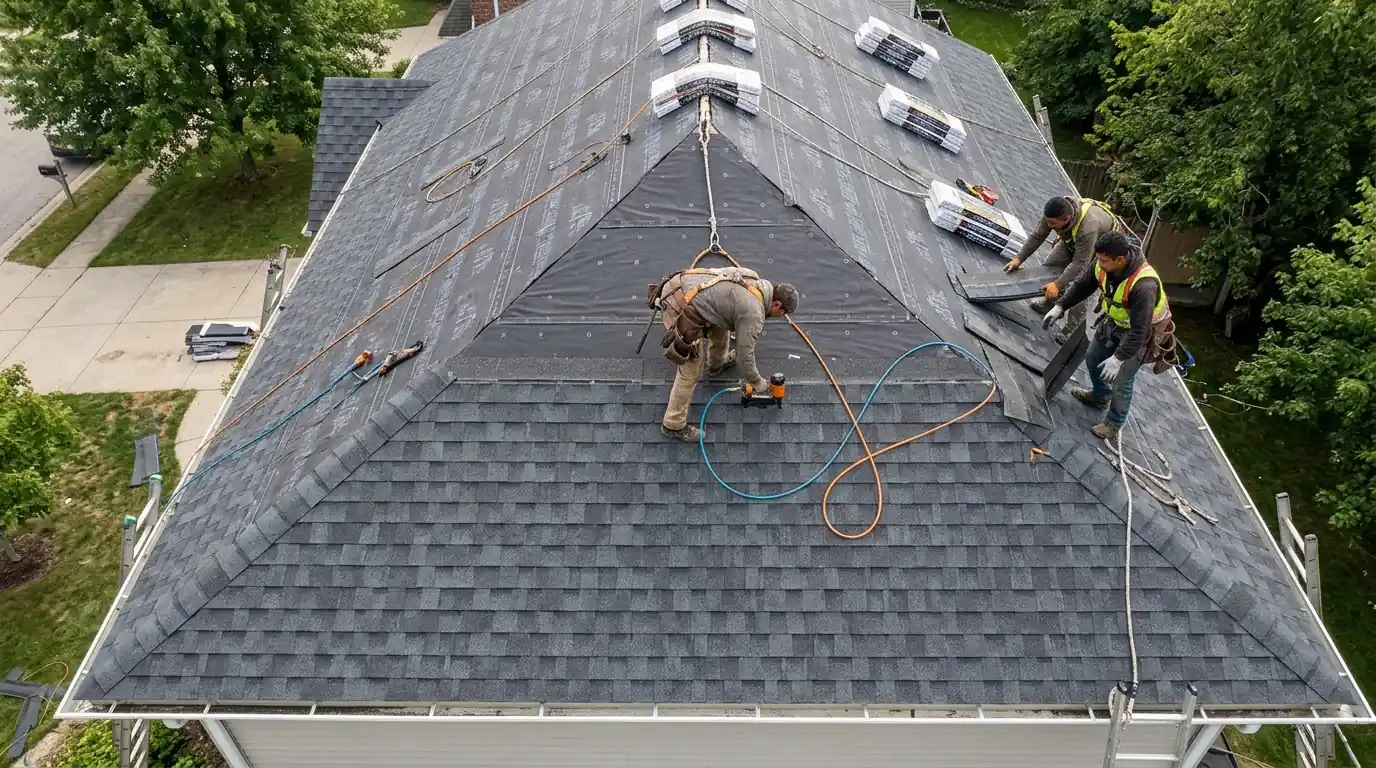
Connecticut gutters carry snow and ice weight. Hidden hangers spaced about every 2 feet hold up much better than old spike and ferrule fasteners.
Where the water goes
Downspouts should discharge well away from the foundation, onto splash blocks, extensions or into a drain line that daylights downhill. Water dumped at the corner of the house ends up in the basement.
Built-in gutters
Many older homes have box gutters built into the cornice. They can work well for decades when relined in copper or membrane, and replacing them with hanging gutters changes the look of the house.
Questions readers ask
Do gutter guards reduce gutter size needs?
No. Guards keep debris out; gutter size still has to match the roof.
How much slope should a gutter have?
About a quarter inch of fall for every 10 feet of run is common.