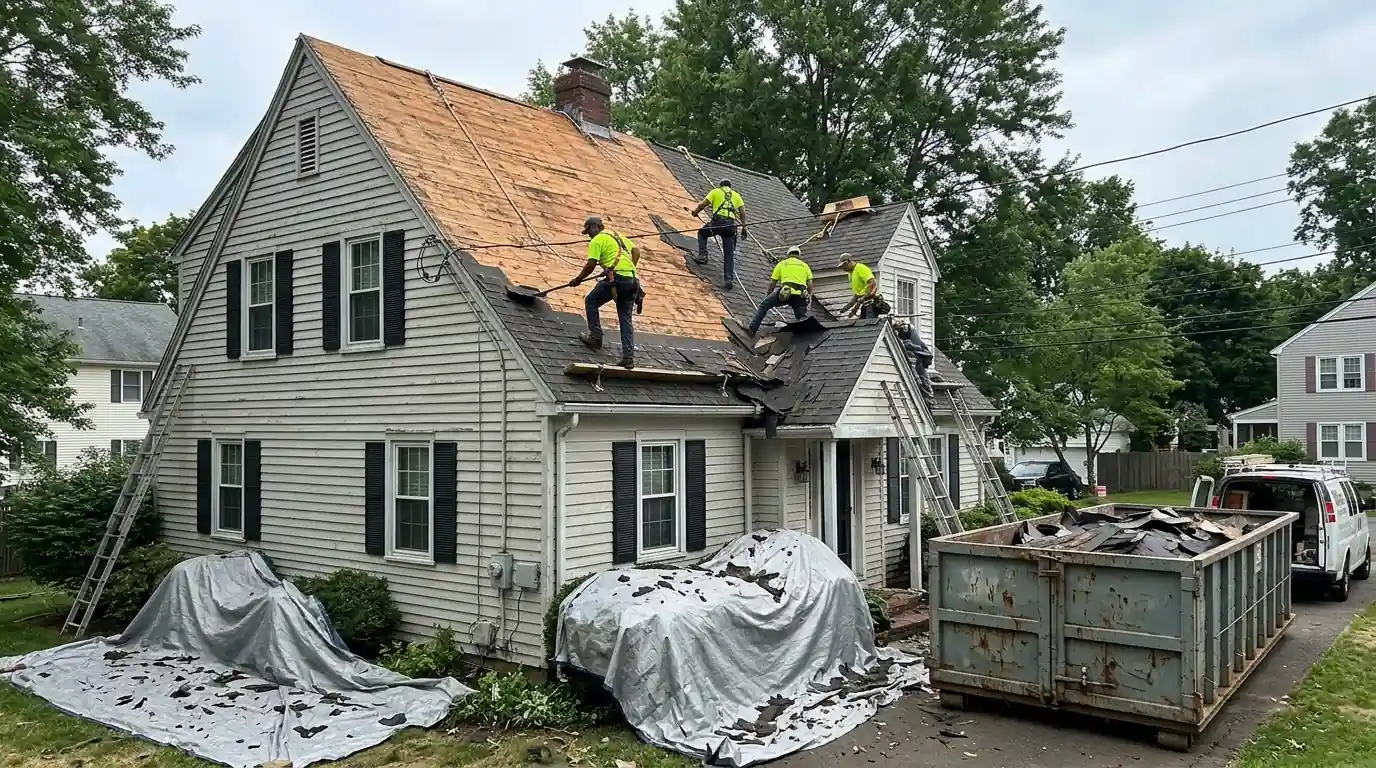
Most asphalt shingle roof replacements on single-family homes in New Haven fall somewhere between about $11,850 and $26,400. Size, pitch, the number of old layers, rotted decking and chimneys or skylights decide where a house lands. Metal, cedar and slate cost more. These are planning ranges; a written quote follows an inspection.
The short version
For an average-sized house with an architectural asphalt shingle roof, a full tear-off and replacement in New Haven usually lands in the low-to-mid teens of thousands. Large, steep or cut-up roofs climb into the twenties. Two- and three-families with mixed flat and pitched sections are priced by section and often run higher.
Those figures include tear-off to the deck, ice and water shield at eaves and valleys, synthetic underlayment, new drip edge and flashing, ventilation, shingles and cleanup. They do not include major framing repairs.
What moves the price
Five things move a roof price more than anything else.
- Size, measured in squares (100 square feet of roof)
- Pitch, because steep roofs need more safety gear and slow the work
- Layers to tear off, since Connecticut allows at most two and each adds disposal cost
- Decking that turns out rotted once the old roof is off
- Details such as chimneys, skylights, dormers and valleys that need new flashing
How decking is priced
Nobody can see the deck until the roof is off, so honest quotes give a per-sheet price for any plywood that has to be replaced. Older New Haven houses often have plank decks with gaps; some need a layer of plywood over them so shingles have full support. We photograph any deck work before we do it.
Material choices and rough multipliers
Architectural asphalt is the baseline. Standing seam metal usually costs two to three times as much per square foot but lasts far longer. Cedar shake sits between the two. Slate replacement is the most expensive roof, which is why we usually repair good slate rather than replace it.
Permits and historic districts
New Haven requires a building permit for a re-roof. Homes in the Wooster Square, City Point and Quinnipiac River local historic districts need Historic District Commission approval for visible changes, which can add a few weeks to the schedule but little to the cost.
Comparing quotes
Line up what is included: tear-off versus overlay, ice barrier coverage, underlayment type, flashing replacement, ventilation and the decking allowance. A low price that skips new flashing or overlays a second layer is not the same job.
Questions readers ask
Is it cheaper to put a new roof over the old one in Connecticut?
An overlay saves tear-off cost, but code allows only two layers and the deck cannot be inspected. Most roofers recommend a full tear-off.
Does homeowner insurance pay for an old roof?
Insurance generally covers sudden damage such as wind or a fallen tree, not wear from age. Check your policy and talk to your agent.