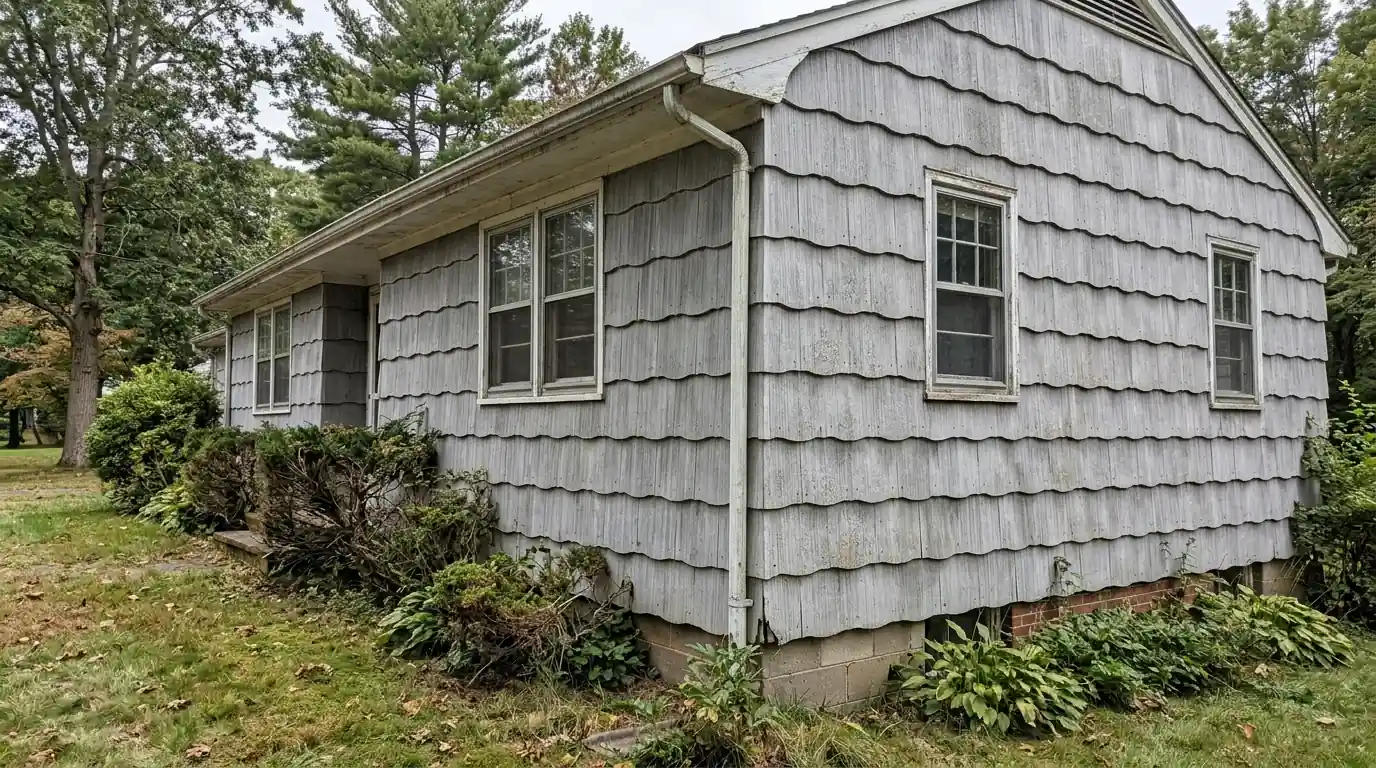
Asbestos cement shingle siding was common on homes built from the 1920s through the 1960s. Intact, it is generally stable; the risk comes from breaking, sanding or removing it. Owners usually choose between leaving it painted, covering it with new siding, or having an asbestos abatement contractor remove it before new siding goes on.
How to recognize it
Asbestos cement siding usually comes as rigid, flat shingles about 12 by 24 inches, often with a wavy bottom edge or a textured, grainy face, nailed in overlapping rows. It is brittle and can crack or chip at corners. Only a lab test confirms it.
Is it dangerous?
Asbestos cement holds its fibers tightly when it is intact. The concern is dust from breaking, cutting, drilling, sanding or pressure washing it. Leave damaged pieces alone until you know what you have.
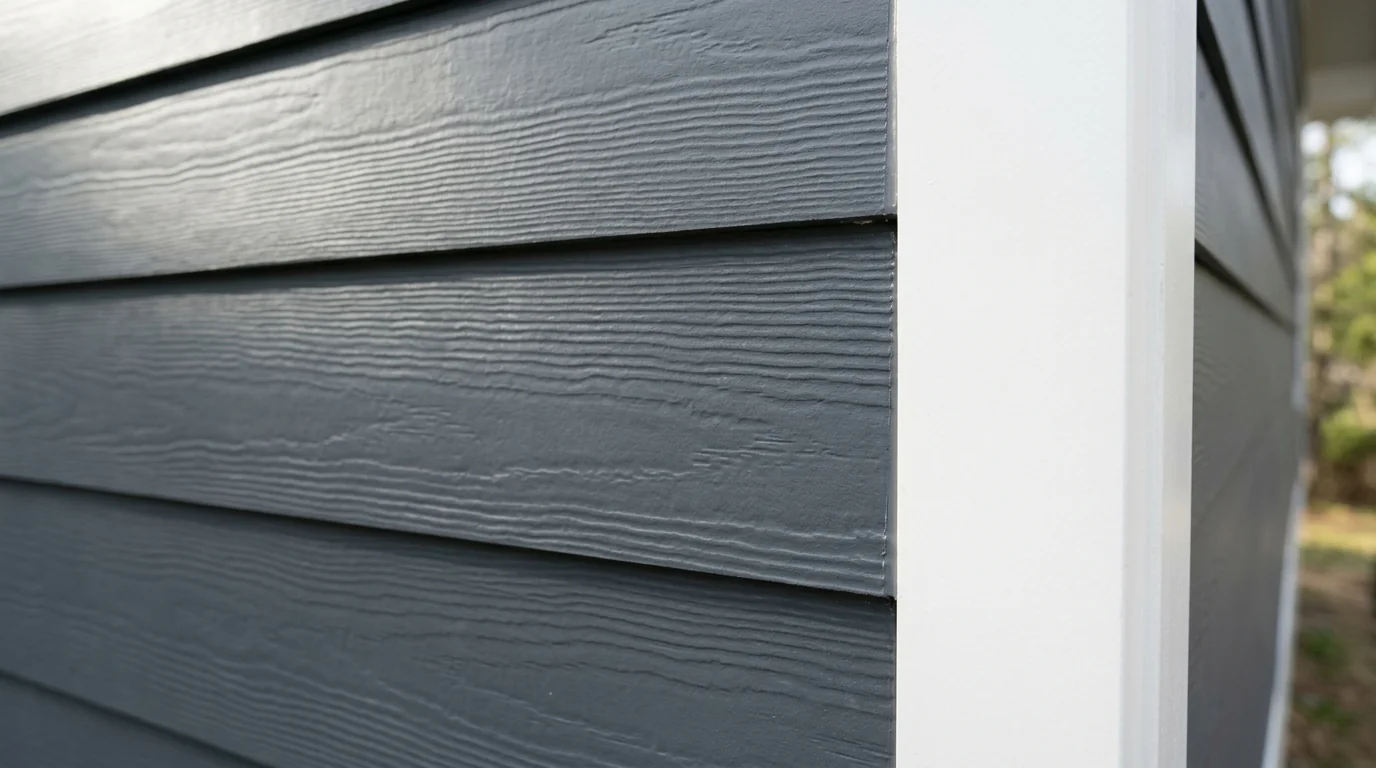
Your three options
There are three common paths.
- Leave it in place and keep it painted and sealed
- Cover it with new siding over a proper wall wrap
- Have it removed by an asbestos abatement contractor, then install new siding
Covering it with new siding
Many owners cover the old siding. The new siding is fastened through the old shingles with care so they are not broken, and window and door trim is extended to the new wall thickness. This avoids disturbing the material.
Removal
Removal must be done by an asbestos abatement contractor following Connecticut rules, and it adds cost. It makes sense when the wall needs to be opened for other reasons or the old siding is badly damaged.
Questions readers ask
Can new siding go directly over asbestos siding?
Often yes, with fastening that avoids breaking the old shingles and trim extended at windows and doors.
Should I pressure wash asbestos siding?
No. Pressure washing can release fibers from the surface.