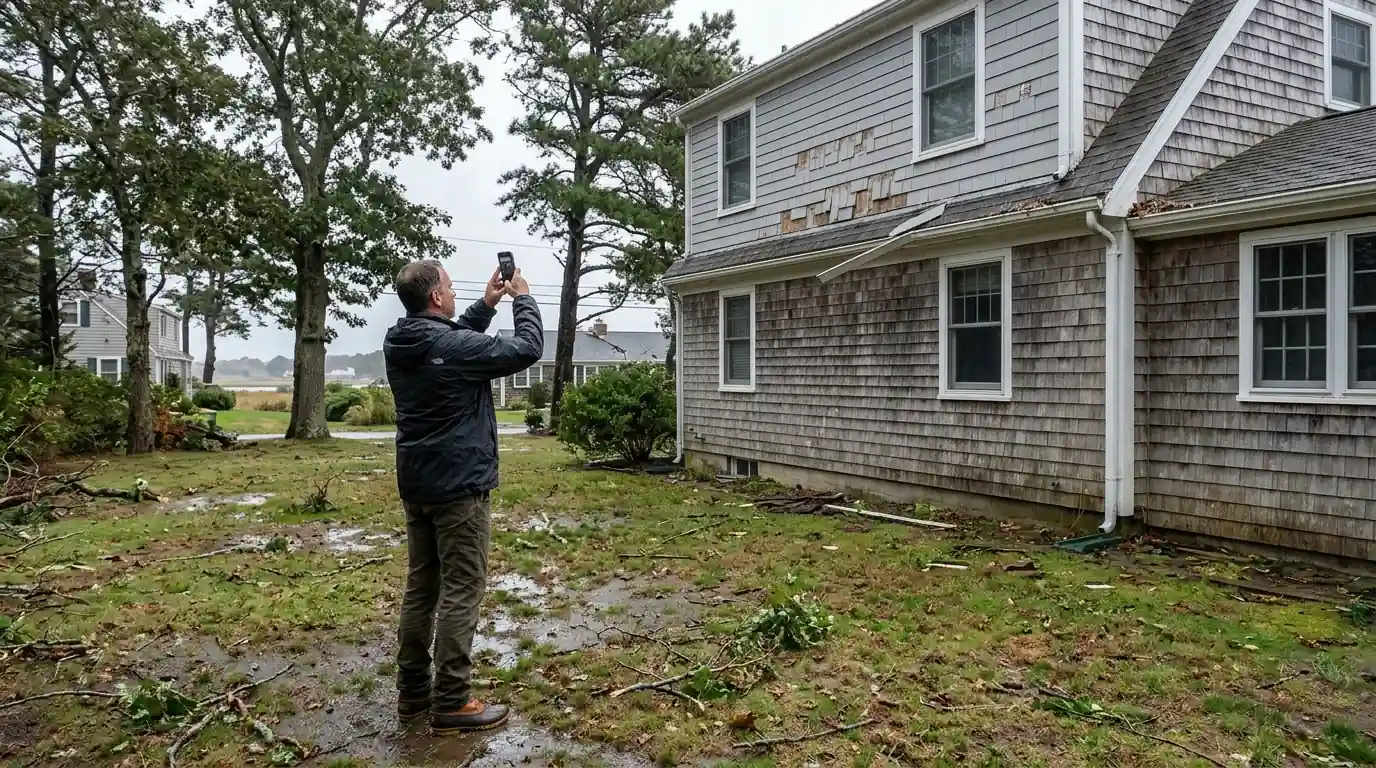
After a nor'easter, check from the ground for missing shingles, lifted ridge caps, loose siding and pulled gutters; check the attic and top-floor ceilings for water; photograph everything with dates; and get a roofer to look before the next storm. Never climb a wet roof.
Start inside
Walk the top floor and the attic with a flashlight. Look for wet insulation, dripping nails, stains spreading on ceilings and damp spots where walls meet ceilings. Put buckets down and move valuables. If water is near light fixtures, turn that circuit off.
Then walk the outside
From the ground, and from a neighbor's yard if you can, look at every side of the house.
- Missing or creased shingles, especially on the windward side
- Lifted or missing ridge and hip caps
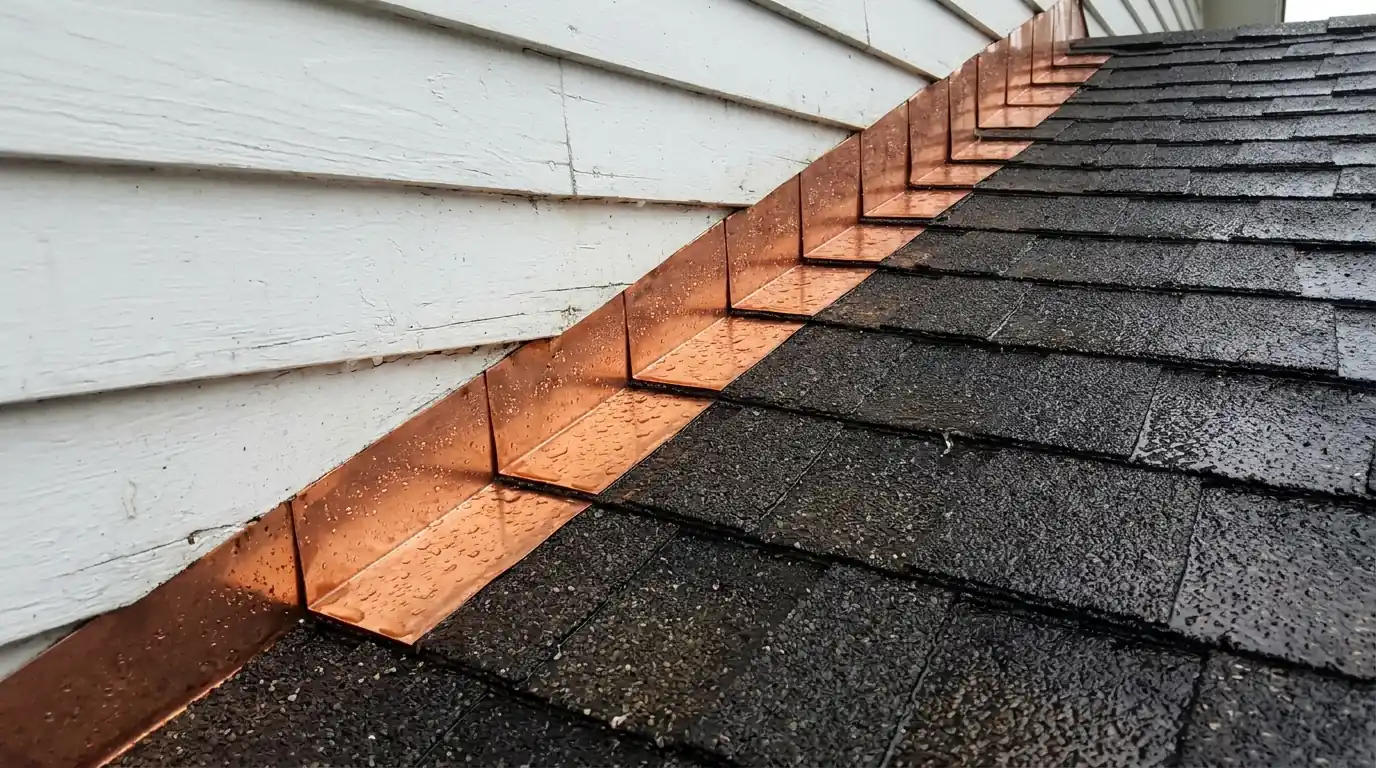
- Bent flashing at chimneys and walls
- Siding panels loose, cracked or missing
- Gutters pulled away or crushed, downspouts disconnected
- Limbs resting on the roof
Photograph and write it down
Take wide shots and close-ups with the date. Note when the storm hit and when you first saw water. Insurers expect prompt reporting and reasonable steps to prevent more damage, such as a tarp.
When to call right away
Water coming in, a limb on the roof, a section of shingles gone or siding torn off the sheathing all need same-day attention. We answer around the clock and can tarp and photograph the damage.
Why shoreline homes see more
Wind off Long Island Sound is stronger and steadier than it is inland. Homes in Morris Cove, City Point, East Haven, West Haven and Branford often see lifted shingles and loose siding after storms that barely touch houses in Hamden.
Questions readers ask
Should I call my insurer or a roofer first after a nor'easter?
Either works. A roofer can document and tarp the damage, which helps the claim and protects the house.
Can creased shingles be repaired?
Creased shingles have lost their seal and should be replaced. A few can be swapped; widespread creasing may justify a new roof.